In this article
- La workation d'équipe maintient la production le jour et renforce la cohésion en dehors des heures de travail. Elle se distingue du séminaire résidentiel, qui interrompt l'activité.
- Durée idéale : 3 à 7 jours. Moins, l'effet est limité ; plus, la logistique se complique.
- Budget en France : 150 à 300 € par personne et par jour. Une semaine pour 10 personnes coûte 7 500 à 15 000 €.
- La France simplifie tout : pas de visa, pas de fiscalité complexe, pas de décalage horaire.
- À l'étranger, l'accord de l'employeur doit être formalisé par avenant ou charte. Vérifier sécurité sociale, fiscalité et assurance accidents du travail.
- Meilleures destinations françaises : Arcachon, Côte d'Azur, Bretagne (mer), Hautes-Alpes, Annecy, Megève (montagne), Bordeaux, Bourgogne, Provence (vignoble), La Réunion (dépaysement).
- 4 pièges à éviter : les vacances déguisées, les fuseaux horaires mal gérés, l'exclusion des non-partants, le non-respect du droit à la déconnexion.
- Whereez organise votre workation clé en main : recherche du lieu, transport, hébergement, restauration, connexion internet, coordination.
A trend is emerging: the ‘workation’, or working from a holiday destination without taking any leave. Once an individual choice, it will become a group activity by 2026, organised by the company for an entire team.
Workation: definition and origin of the concept
What does ‘workation’ mean? The portmanteau that says it all
The word ‘workation’ is a portmanteau of the English words ‘work’ and ‘holiday’. The idea is to work from a place dedicated to leisure, without changing your working hours.
Workation vs digital nomadism vs remote working: what are the differences?
Here are the differences:
- Remote working takes place from home.
- Digital nomadism is a permanent way of life.
- A workation, on the other hand, is a temporary break: the same employment contract, the same tasks – only the location changes.
Why workations are set to boom in 2026
Three factors:
- The widespread adoption of hybrid working
- The quest for a work-life balance
- The war for talent.
Companies that were already organising an annual residential seminar see this as a natural progression.
The two forms of workation: individual and group
The individual workation: the nomadic remote worker
An employee goes off to work for a week in Brittany or Lisbon, with their employer’s consent. They make the most of the location in their free time.
The group workation: the 2026 version that changes everything
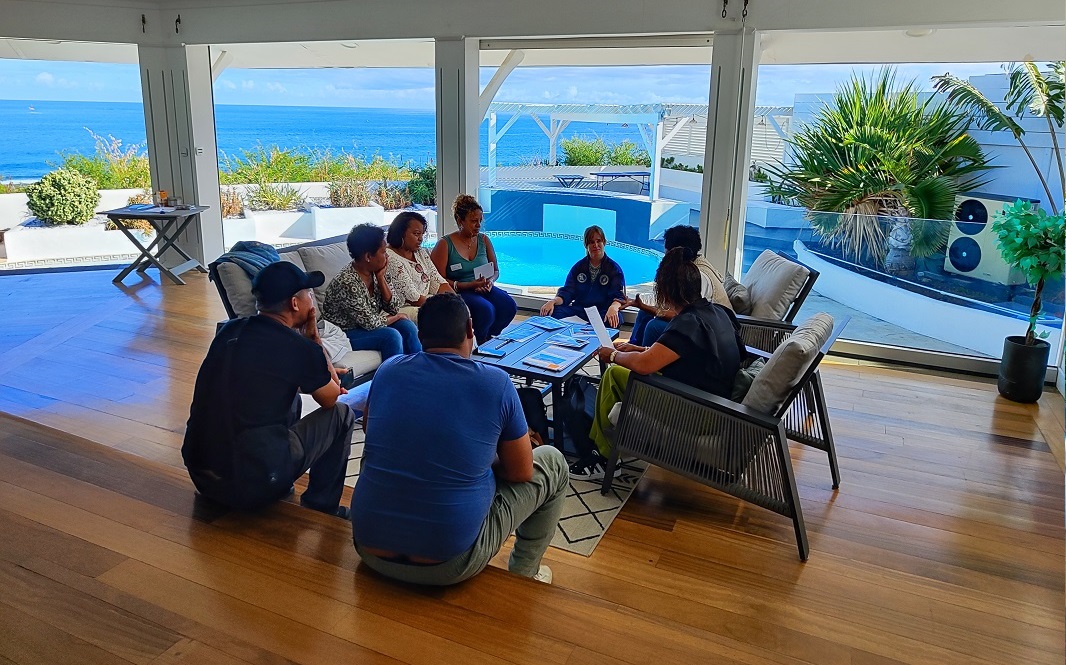
The company organises it: a whole team goes off to work for several days in the same location, focusing on productivity during the day and team-building in the evening.
Team workation vs residential seminar: where is the line drawn?
A seminar interrupts work to focus on strategy or team-building. A workation maintains day-to-day operations. To mark a key event, it’s better to organise a dedicated residential seminar, as the two formats are complementary.
Are you thinking of organising a workation for your team? Receive three bespoke proposals within 48 hours.
Why organise a team workation? The real benefits
- Strengthen team cohesion without interrupting work: the team carries on working. Bonds are formed over meals, breaks and evenings.
- Attract and retain talent — a key employer brand factor: it signals trust and flexibility. For younger generations, this benefit carries just as much weight as salary.
- Boost collective creativity through a change of scenery: getting out of the office unlocks ideas; a new environment stimulates creativity and spontaneous exchanges.
- Aligning the team with strategic objectives in a calm setting: away from the hustle and bustle of everyday life, in-depth discussions become possible and the team aligns itself with priorities.
How to organise a team workation: the 7 steps
1. Define the objectives and success metrics
Team cohesion, project progress, onboarding? Set a clear and measurable objective.
2. Choose the ideal duration (3 to 7 days)
Less than 3 days and the impact is limited; more than 7 and the logistics become more complicated. Aim for a full week.
3. Select the destination — France or abroad?
France makes everything easier: no visas, no complex tax system, no time zone differences. Going abroad is the stuff of dreams but requires more planning.
4. Find the right venue: villa, estate or hotel campus
Prioritise a comfortable workspace and a reliable internet connection. A villa for small teams, an estate for larger groups.
5. Put together the programme — balance work, team-building and downtime
Normal working days, evenings dedicated to team-building, with one or two group activities.
6. Plan the logistics (transport, accommodation, catering, internet connection)
Organised group transport, on-site catering, internet speed tested in advance. Working with a local events agency that knows the area saves valuable time.
7. Communicate internally and get the teams on board
Announce the project early and find out about everyone’s constraints: buy-in is key to success.
Whereez organises your workation from start to finish. Discover our packages.
The best workation destinations in France in 2026
Seaside: Arcachon, the Côte d’Azur, Brittany
The coast remains a safe bet: work with a view of the sea, dine with your feet in the sand.
Mountains: Hautes-Alpes, Annecy, Megève
The fresh air boosts concentration. Organising an event in the Hautes-Alpes or Annecy combines stunning views with outdoor activities.
Vineyards and countryside: Bordeaux, Burgundy, Provence
Wineries offer a blend of tranquillity and the good life. A unique event in Bordeaux or Provence, combining work with wine tastings, is sure to appeal to all teams.
Island and a change of scenery: Réunion
For a complete change of scenery without leaving France, a corporate event in Réunion combines a compatible time zone with volcanic landscapes.
Workations abroad: legal framework and key considerations
What does French employment law say about remote working abroad?
Nothing prohibits it, nor does anything automatically authorise it. Everything depends on the employer’s consent, formalised in a policy or an addendum.
The employer’s obligations (social security, tax, insurance)
If the stay exceeds a few weeks, social security and tax residency become issues. You should also check your cover for workplace accidents outside France.
The European destinations that are easiest to deal with administratively
Within the EU, no visa is required: the A1 certificate maintains your affiliation to the French social security scheme.
Favourite destinations: Portugal, Spain, Italy.
‘Digital nomad’ visas that facilitate workations outside the EU
More than 50 countries offer a visa specifically for remote workers. These schemes are primarily aimed at long-term stays.
How much does a team workation cost?
Budget items to plan for
Four main categories: transport, accommodation, meals and activities, plus a contingency fund for the unexpected.
Price range depending on destination and duration
Expect to pay between €150 and €300 per person per day in France. A week for ten people works out at €7,500 to €15,000.
Measuring the return on investment
Engagement, talent retention, project progress: measure the before and after.
Workations: pitfalls to avoid and best practices
The pitfall of ‘disguised holidays’ that demotivate
Without a clear framework, employees may lose their rhythm, put off certain tasks or gradually lose sight of their objectives. To avoid this, set specific working hours and deliverables: work remains the priority.
Managing time zones and availability
Stay contactable during key time slots. In Europe, this is less of an issue, but beyond that, plan joint meetings in advance.
Including staff who cannot take time off
Family commitments, health issues, on-site assignments: make alternative arrangements and never penalise those who are absent.
Respecting the right to disconnect
The right to disconnect, as set out in the Labour Code (Article L2242-17), also applies during workations: well-rested teams are high-performing teams.
FAQ
Is a workation suitable for all professions and all teams?
A workation is particularly suited to roles that are compatible with remote working and predictable working hours. Support, product, marketing, editorial or tech teams are better suited to it than roles involving customer service, manual handling or on-site work. You should also consider workload, autonomy and the ability to share a workspace without compromising confidentiality.
What internal policy should be put in place before adopting a workation?
An internal workation policy must set out in writing the conditions for remote working, the authorised place of work, working hours and confidentiality rules. This framework prevents misunderstandings between professional and personal life from the moment the project is announced.
What facilities make a workation space truly effective?
An effective workation space relies on a reliable internet connection, a proper workspace and a level of quiet conducive to concentration. Make sure you have a proper chair, plenty of power sockets, a backup plan for 4G or fibre broadband, a room for calls and a tried-and-tested video-conferencing tool. A pleasant hotel isn’t enough if the working day is spent at a coffee table with an unreliable Wi-Fi connection.
How can you measure whether a workation has genuinely improved productivity and team cohesion?
Productivity during a workation is measured using indicators tracked before, during and after the stay. Compare task progress, adherence to deadlines, the quality of deliverables, attendance rates at team meetings and immediate feedback on how balanced people feel.
Can a workation create tensions within the team?
A workation creates tensions when the team perceives unfairness, an uneven distribution of workload or an opportunity reserved for only a few types of employee. Parents, employees with care responsibilities or those with health restrictions may feel left out if you do not provide any alternatives.
Is a separate budget needed for IT security and data privacy during a workation?
A dedicated budget for IT security and privacy during a workation remains good practice, even for a short stay. You’ll need a VPN, privacy screens, strong authentication, guidelines on making calls in public and regulated data storage.
What is the best daily routine for a successful workation without blurring the lines between work and holiday?
A good daily routine during a workation helps maintain a proper work environment without encroaching on leisure time. Set a fixed start time, dedicated slots for in-depth work, a proper lunch break and a fixed finish time that everyone sticks to. This structure helps maintain the balance between work and holiday, whilst avoiding those vague days that end up dragging on.
Key takeaway
- Organise a team workation to maintain productivity during the day and strengthen team spirit outside working hours.
- Aim for 3 to 7 days, with a measurable objective, a structured programme and an internet connection tested before departure.
- Choose France to avoid visa requirements, complex tax rules and jet lag; if travelling abroad, formalise the agreement and check insurance, social security and tax arrangements.
- Set clear timetables, deliverables and alternatives for those unable to attend to prevent the trip from becoming a disguised holiday and to avoid anyone feeling left out.